he U.S. Navy plans to issue a contract to Norway's Kongsberg Defense & Aerospace for equipment and missile flight test support services.
The equipment and services are for an additional Foreign Comparative TestingPhase II demonstration of Kongsburg's Naval Strike Missile conducted from a U.S. Littoral Combat Ship.
Kongsberg will supply missiles and ship equipment -- including deck-mounted launchers and command systems -- and installation and integration services for the testing, which is expected to end by the final quarter of FY 2018.
"We are very pleased that the U.S. Navy continues and expands the test and evaluation of the NSM missile," said Harald Annestad, president of Kongsberg Defense Systems. "The NSM is operational in the Norwegian and Polish Navies from both ships and land-based coastal defense.
"It is an off-the-shelf and non-developmental 5th-generation strike missile system that can be rapidly deployed for operational use."
The Kongsberg Naval Strike Missile is a long-range precision weapon that uses an inertial navigation system aided by a military GPS receiver and laser altimeter. Its stealthy design, passive infrared and imaging sensor makes it hard to detect.
The U.S. Navy first fired the NSM from a Littoral Combat Ship in 2014.http://www.upi.com/
The primary reason for Turkey, a major US ally and a member of the North Atlantic Treaty Organization, to purchase the FN FS-2000, the export version of the Chinese HQ-9 long-range surface-to-air missile, was not to defend its airspace but to steal critical information regarding the missile for the United States, according to Kanwa Defense Review operated by Andrei Chang, a military analyst based in Canada, also known as Pinkov.
Turkey's national interests rely on the acceptance of the United States and European Union, the article said that and for this reason it is very hard to imagine that some day Turkey will side with potential NATO adversaries such as Russia or China. The government in Ankara also realizes how much pressure will be on them if they chose to purchase Chinese instead of American air defense systems.
Kanwa said that Turkey's new cross-harbor tunnel beneath the Bosphorus was completed with investment from Japan. As Japan is now a major advocate of Turkey's accession to the European Union, the report said it is impossible for it to become a security partner with China, which is engaged in a territorial dispute with Japan in the East China Sea.
The report also said that Germany, a fellow NATO member, could can stop Turkey from getting too close to China through halting the provision of supplies that the Turkish navy requires for its Meko-class frigates. The United States can also refuse to sell the fifth-generation Lockheed Martin F-35 stealth fighters to Turkey in protest against Ankara's cooperation with Beijing. This would be a very expensive price for Turkey to pay for changing sides, according to the magazine.
As most of its weapons systems are from either the United States or other NATO powers, Turkey is unlikely to purchase Chinese missiles, Kanwa said, which is why Russia pulled its S-400 from the competition. Apparently, Turkey is trying to steal critical data from the HQ-9 for its allies through the purchase of the Chinese missile, following the example of South Korea when it previously did the same with the Russian-built Sukhoi Su-35 fighter.http://www.wantchinatimes.com/
Iranian defense minister on Monday unveiled the latest achievements of the country’s local experts, including a high-tech composite armor for the military equipment, and a smart seeker nose cone for the high-precision ballistic missiles.
The home-made products were unveiled by Defense Minister Brigadier General Hossein Dehqan in a scientific festival here in Tehran on Monday, held to introduce the latest achievements brought by the Iranian Armed Forces' industrial researchers.
The first prize in the festival went to the military experts who manufactured an advanced technological product, namely a smart seeker nose cone that is mounted on the ballistic missiles with pinpoint accuracy.
The new product, already in possession of few developed countries, is exclusively mounted on the strategic weapons, and plays a significant role in the sphere of missile capabilities.
Brigadier General Dehqan also unveiled another indigenous military product, a composite armor.
The high-tech armor enjoys a unique type of yarns in its structure and has been manufactured on the basis of shear-thickening fluid (STF) technology, enabling the product to behave like a solid when it encounters mechanical stress.
The home-made armor is even resistant to armor-piercing projectiles with steel core, and also meets the global standards of the military equipment.
Getting advantage of the new armor in Iran’s military equipment will decrease by 76% the weight of the armors that are installed on the tanks, armored personnel carriers and other vehicles.
In a similar development in December, 2013, Dehqan unveiled a dozen home-made technological products that are aimed to be used in the country’s cyber sectors.
An “Indigenous and Safe Operating System” was among the 12 products unveiled at the time.http://www.tasnimnews.com/
That’s what the sailors of the Italian battleship Roma must have wondered in the final moments before they died.
Naval warfare changed on Sept. 9, 1943. Dictator Benito Mussolini had been deposed, the new Italian government was abandoning a lost war and its doomed Nazi ally and the Italian fleet was sailing to Malta to surrender. But the habitually treacherous Nazis, who had always suspected their Italian allies of similar trickery, detected the Italian ships leaving port.
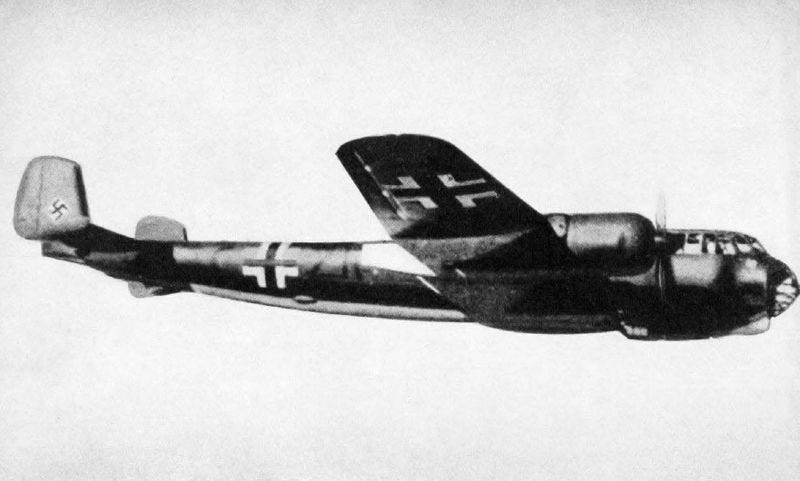
The Luftwaffe dispatched a force of Dornier Do-217 bombers to deal with the Italian ships.
As the bombers approached, the Italians were unsure whether the Germans meant to attack or just intimidate. They were relieved to see the German aircraft appear to drop their bombs into the ocean. Perhaps with uncharacteristic gentleness, the Germans were just firing warning shots.
But then something unexpected happened. Instead of plunging straight down into the sea, the bombs headed toward the Italian ships. One slammed into Roma’s hull, exited out the other side and exploded in the water, destroying an engine room.
A second bomb penetrated the deck into the forward magazine, where shells for the ship’s big 15-inch guns were stored. The battleship exploded, killing 1,253 members of her crew.
The age of the ship-killing missile had dawned.
The first anti-ship smart bombs, invented like so many other weapons by the dark scientists of Nazi Germany, were not just deadly. They seemed inhuman. A “Wellsian weapon from Mars,” was how one newspaper reporter described an early attack.
Smart bombs have become so common in modern warfare that we take them for granted. Yet 70 years ago, a bomb that could chase a ship seemed as exotic and frightening as the muskets of the conquistadors must have seemed to the Aztecs. The Germans “made them [the missiles] turn corners,” an Allied sailor complained.
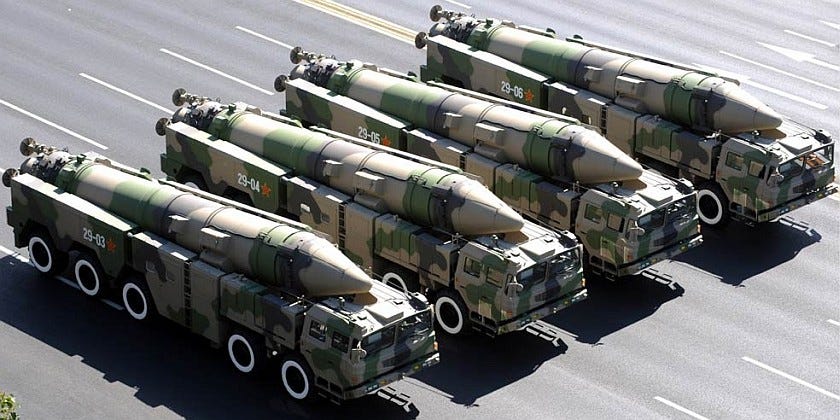
Anti-ship guided missiles have been used for decades now. Missiles sank the Israeli destroyer Eilat in 1967 and the British destroyer Sheffield in 1982. Today, China hopes that weapons such as the DF-21D ballistic missile, with a range of a thousand miles, can sink U.S. aircraft carriers and thus neutralize American naval power in the Pacific.
But these weapons did not materialize overnight in a Beijing weapons lab. They are the fruits of Nazi research from more than 70 years ago.
A Fritz-x guided bomb. Wikipedia photo
A smart bomb named Fritz
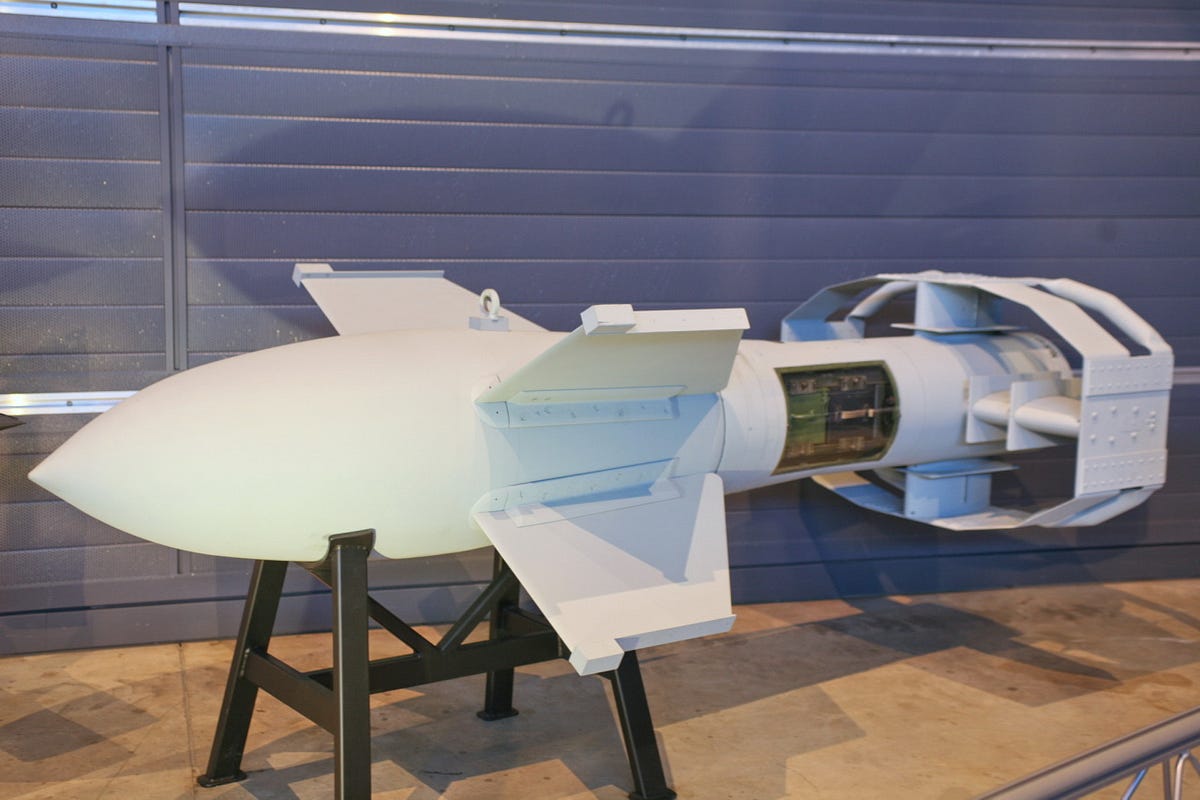
The weapon that sank Roma was known by the very German name Fritz-X. It was not a powered missile but a 3,000-pound armor-piercing gravity bomb meant to be dropped from a bomber at 20,000 feet.
Battleships were armored to survive multiple bomb hits—in 1944, the Japanese super-battleship Musashi was hit by 17 bombs and 19 torpedoes before sinking. But a bomb dropped from high enough should have enough kinetic energy, imparted by gravity, to smash through thick deck armor.
The problem was hitting the battleship in the first place. High-flying bombers in the 1940s had scant chance of hitting a warship frantically weaving through the water at 30 knots. That meant aircraft had to come in low to attack, which made them easier targets for the ship’s antiaircraft guns and also robbed the bombs of kinetic energy.
The 11-foot-long Fritz-X, slung under the wing of a bomber, had radio-controlled fins that could change the munition’s glide path. A tail-mounted flare enabled the operator on the bomber to track and adjust the weapon’s course. Tests showed that 50 percent of bombs would land within five meters of the target—astounding accuracy for the 1940s.
Does this sound familiar? It should, because the concept endures in modern weapon such as America’s Joint Direct Attack Munition, a kit that makes dumb bombs smart by adding fins and satellite guidance.
Hs 293 missile. Youtube video
The Hs 293 missile
The Fritz-X was an awesome battleship-killer, but only under the right conditions. A glide bomb has only gravity rather than a rocket motor for propulsion. The steerable fins on the Fritz-X could adjust its trajectory only slightly, meaning the bomb had to be dropped within three miles of the target.
While deadly to heavily armored warships, the armor-piercing Fritz-X was actually toomuch bomb for small ships. It would slice all the way through unarmored destroyers and transports and explode in the sea.
The Nazis had another weapon, a genuine anti-ship missile called the Hs 293. The 12-foot-long weapon looked like a miniature airplane with a rocket motor slung underneath.
The radio-controlled Hs 293 could be launched from 10 miles away, out of range of shipboard anti-aircraft guns. Its 2,300-pound high-explosive warhead detonated on contact with a lightly armored ship.
“In a typical deployment, the attacking aircraft would approach the target to within 12 kilometers (6 miles), then fly a parallel course in the opposite direction,” writes Martin Bollinger, author of Wizards and Warriors: The Development and Defeat of Radio Controlled Glide Bombs of the Third Reich.
“When the ship was about 45 degrees off the forward right side, the aircraft launched the HS-293,” Bollinger continues. “The Walther liquid-fueled rocket, running for 10 or 12 seconds, would accelerate to about 600 kilometers per hour (325 knots), at which point the operator had turned the missile into the target.”
“Once the rocket burned out,” Bollinger explains, “the missile continued with its forward momentum, maintaining a glide by virtue of short wings, until the operator steered it into the target.”
German crews loading a Fritz-X on a bomber. Via Falke Eins
The electric razor missile defense
The British and Americans were gravely worried. By the fall of 1943, Allied forces had captured North Africa and Sicily, the U-boat threat was diminishing and the Luftwaffe faded before growing Allied air strength. Now the Brits and Americans could focus on the dangerous task of landing their armies on the European continent.
First they had to thwart the new German ship-killers. The Allies could mostly protect the vulnerable amphibious invasion fleets from regularGerman air attacks. But if German aircraft could stand off at a distance and lob bombs with pinpoint accuracy onto the soft-skinned transports and their escorts, then the Third Reich might stave off invasion.
Fortunately, a disgruntled German scientist had warned the Allies about the smart bombs in 1939, and Ultra code-breakers had intercepted German communications regarding the weapons.
The British outfitted the sloop Egret with special equipment to identify the radio frequencies used to control the German munitions. Some 13 days before Roma was sunk, Egret joined a convoy sailing within range of German bombers based in France.
As hoped, the Germans attacked the convoy with Hs 293 missiles. Unfortunately, one of the ships sunk was Egret.
The Allied landing at the southern Italian port of Salerno on Sept. 3, 1943 was a wake-up call for alliance. The Germans counterattacked and almost drove the Anglo-American troops into the sea. Gunfire from Allied warships saved the landing force … and the entire operation.
But at a terrible cost. The Luftwaffe launched more than 100 Fritz-X and Hs 293 weapons. A Fritz-X struck the famous British battleship Warspite and put the vessel out of commission for months.
Another Fritz-X hit a gun turret on the U.S. light cruiser Savannah and “penetrated through the two-inch armored surface of the turret, tore through three more decks and exploded in the ammunition handling room deep in the bowels of the ship,” Bollinger writes.
Miraculously, Savannah survived—but 197 of her crew did not. German guided weapons sank and badly damaged around a dozen ships off Salerno.
Convoys sailing the Atlantic and Mediterranean also suffered. Convoy KMF-26, whose escort included included two U.S. destroyers equipped with the first anti-missile jammers, was attacked off the Algerian coast on Nov. 26, 1943.
An Hs 293 slammed into the troop transport Rohna, carrying U.S. soldiers to India. At least 1,149 passengers and crew died in what Bollinger describes as the “greatest loss of life of U.S. service members at sea in a single ship in the history of the United States.”
It was not until the 1960s that U.S. authorities even admitted that Rohna had been sunk by a guided missile rather than conventional weapons.
Rumor spread among desperate sailors that switching on electric razors would jam the radio frequencies of the “Chase Me Charlies,” as the British called the guided munitions.
An urgent and massive anti-missile effort ensued. Ships were told to lay down smokescreens so Germans aircrews couldn’t see their targets—and to take high-speed evasive action under attack. But how could anchored transports unloading troops and supplies, or warships providing naval gunfire, maneuver at high speed?
The Allies pinned their hopes on electronic warfare, another class of modern weaponry originating in World War II. The British were already dropping aluminum foil decoys to jam German radars. Less well-known are the Allies’ intensive efforts to disrupt German anti-ship missiles.
Allied agents interrogated captured Luftwaffe aircrew. Recovery teams sifted through missile fragments from damaged ships and examined remnants of bombers left behind on airfields in Italy.
The most intensive work took place in labs across Britain and America including the U.S. Naval Research Laboratory, where scientists worked feverishly to jam the radio frequencies used by German missile controllers. operators to control the missiles.
The British chose barrage jamming of multiple frequencies, while the Americans opted for what they considered a more efficient technique of jamming only specific frequencies. The U.S. installed the first jammers on two destroyers in September 1943.
The first anti-missile jammers were primitive and cumbersome by today’s standards. American equipment required multiple operators and devices to identify the correct frequency and match the jammer to the frequency—and do it all in 10 or 20 seconds before the missile hit its target.
Early jammers didn’t work. Based on faulty intelligence, the Allies guessed that the German missiles were controlled by High Frequency signals under 30 MHz. The German actually used the Very High Frequency band of around 50 MHz.
The missiles kept coming.
Yet by August 1944, the Germans missile campaign was over. Some of the last Hs 293s were not even launched at ships, but against French bridges used by Patton’s advancing tank columns. Less than a year after its dramatic debut, the German smart bomb threat disappeared.
German Dornier 217 bombers carried the smart bombs. Wikipedia photo.
No wonder weapon
It’s hard to estimate losses caused by the guided weapons. German air raids saturated Allied defenses by combining smart bomb attacks with conventional dive bomber and torpedo assaults, so it is always not clear which weapon hit a ship.
The Allies also tried to maintain morale by attributing guided weapon losses to conventional weapons.
Bollinger counts 903 aircraft sorties that carried around 1,200 guided weapons. Of those 1,200, almost a third were never fired because the launch aircraft aborted or were intercepted.
Of the remaining 700 weapons, another third malfunctioned. Of the approximately 470 whose guidance systems worked, at most 51—or just over 10 percent—actually hit their targets or landed close enough to damage them.
Bollinger calculates that just 17 to 24 ships were sunk and 14 to 21 damaged.
“At most, only one weapon in 24 dispatched from a German airfield scored a hit or damage-causing near miss,” Bollinger writes. “Only about one in 14 of the missiles launched achieved similar success, and at most one in nine of those known to respond to operator guidance was able to hit the target or cause significant damage via a near-miss.”
“This is very different from the 50-percent hit rate experienced during operational testing,” Bollinger points out.
To be fair, the technology was new. There were no lasers or fire control computers. The Fritz-X and Hs 293 were manually guided all the way. Operators had to track both missile and target through cloud, fog and smoke, without the benefit of modern thermal sights.
“It was virtually impossible to hit a ship that was steaming more than 20 knots and could fire back,” Bollinger tells War is Boring. “Almost all of the hits were against slow and/or defenseless targets.”
Bollinger hypothesizes that a phenomenon called “multi-path interference,” unknown at the time, may also have hampered the performance of the Hs 293. Radio command signals sent from the bomber to the missile might have overshot the weapon, bounced off the ocean surface below and interfered with the missile guidance signal.
The early jammers were ineffective, but Bollinger believes that by the time of the Normandy assault in June 1944, the equipment had improved enough to offer a measure of protection—and partly explains why German missiles performed poorly later in the war.
Strangely, while the Germans took measures to counteract Allied jamming of their air defense radars, they never really addressed the possibility that their anti-ship missiles were also being jammed.
It’s wrong to blame the bomb for the faults of the bomber. The real cause for the failure of German smart bombs was that by the time they were introduced in late 1943, the Luftwaffe was almost a spent force.
Already thinly spread supporting the hard-pressed armies in Russia and the West, the German air arm suffered relentless bombardment by U.S. B-17s and B-24s. The Third Reich could never deploy more than six bomber squadrons at a time equipped with the Fritz-X and Hs 293.
When the Luftwaffe ruled the skies over Poland and France in 1939, this might have been enough. By late 1943, a guided-bomb run was practically suicide.
German bombers making daylight attacks had to run a gauntlet of fighters protecting Allied ships in the daytime. Night attacks were marginally safer for the bombers but still exposed them to radar-equipped British and American night fighters. The Allies aggressively bombed any airfield suspected of harboring the smart bombers.
“Allied fighter air cover was by far the most important factor,” Bollinger tells War is Boring. “Not only did it lead to large numbers of glide-bombing aircraft getting shot down, it also forced the Germans to shift missions from daylight to dusk or nighttime. This in itself lead to a major and measurable reduction in accuracy.”
Many raids would cost the Germans a few bombers. By the standards of the thousand-bomber raids over Germany, this was trifling. But for the handful of specially trained and equipped Luftwaffe squadrons, it was catastrophic.
Of the 903 aircraft sorties, Bollinger estimates that in 112 of them, the bombers were lost before launching their weapons. Another 21 were shot down or crashed on the return flight, for an overall loss ratio of 15 percent.
“Each time a pilot departed on a glide bomb mission, he had almost a one-in-seven chance of never returning in that aircraft safely,” Bollinger says. “Put another way, the probability that a pilot would return safely after each of the first 10 missions was only 20 percent.”
Chinese DF-21C missiles. Via Chinese Internet
Learning from history
The rise and fall of the Nazi anti-ship missiles offers lessons for the U.S. and its opponents in the present day. American planners worry that smart anti-ship weapons in the hands of China, smaller nations like Iran or even insurgent groups could threaten U.S. warships and amphibious forces.
One lesson from the 1940s is that passive defenses such as jamming have limited utility against access denial weapons. The best defense is to destroy the launch vehicle before it can fire. “Kill the archer” is the term the Pentagon uses.
China stands to learn the most profound lesson. For all the power and terror of the German anti-ship weapons, they could not compensate for the inability of the German navy and Luftwaffe to confront the Allied navies on the open seas.
Smart bombs did worry Allied commanders, but the new munitions couldn’t prevent the amphibious invasions of Italy and France. Chinese missiles might disrupt U.S. operations, but they are no substitute for countering a powerful navy with an effective navy of your own.
Perhaps the biggest lesson of all is that what is new is old. With each passing year, the weapons of World War II seem closer to the era of Gettysburg and Jutland than the high-tech warfare of today. That perception can encourage an unjustified smugness.
The problems modern navies and air forces struggle with—anti-ship guided missiles, jamming, operations in contested airspace—were the same that German pilots and Allied sailors faced.
The terror that the crew of an Italian battleship, British cruiser or American merchant ship felt at the sight of German missiles might not differ from what a U.S. destroyer or carrier crew might feel while being targeted by Chinese ballistic missiles.SOURCE:war-is-boring
Since the beginning of the century, the PLA has introduced a range of tactical air-to-surface missiles (ASM) as standoff weapons for its air force and naval aviation troops. These missiles are a combination of both Russian and Chinese indigenous designs, intended primarily for use against large static land targets such as bridges and buildings. An overwhelming majority of PLA’s tactical ASMs use TV-guidance with datalink command, used in conjunction with a targeting pod to provide datalink between the missile and its carrier aircraft. The tactical ASMs introduced in more recent years feature ‘fire-and-forgot’ and all-weather, day/night operation capabilities.
In the first of this two-part report, we examine five tactical ASMs introduced by the PLA between 2000 and 2006.
KD-63
The KD-63 (KongDi-63, official designation K/AKD63, previously designated YingJi-63 or YJ-63), is an air-launched cruise missile (ALCM) developed by China Haiying Electro-Mechanical Technology Academy (CHETA, a.k.a. The Third Academy). The missile was derived from the HY-4 (NATO code name: CSS-C-7 Sadsack) land-based anti-ship cruise missile (ASCM) and the YJ-6 (CAS-1 Kraken) air-launch anti-ship missile, both of which can trace their origins to the HY-2 (CSS-C-3 Seersucker), a Chinese derivative of the Soviet P-15 (SS-N-2 Styx) liquid-fuel active radar-homing anti-ship missile.
The KD-63 features a large round body with a round nose and an engine inlet located under the missile body near the rear end. It has a pair of large delta wings and an X-shape tail control surface arrangement. The missile consists of four main sections: guidance, warhead, propulsion, and control surfaces.
The KD-63 is carried by the modernised Xi’an H-6H (Tu-16 Badger) medium-range bomber. Each H-6H carries two KD-63 missiles on its under-wing stores stations. The missile is launched at altitudes between 200 m to 5,000 m from a dive. Once leaving the carrier aircraft, the missile drops down for 70-120 m before its engine starts. The missile is then accelerated to a sustained subsonic speed of 900 km/h and flies at a typical altitude of 600 m.
KD-63 TV-guided air-to-surface missile
KD-63 missile was developed from the HY-4 anti-ship missile
The KD-63 relies on inertial navigation, with input of datalink command (and possibly GPS signal correction) and TV terminal guidance. The missile is fitted with a CCD camera, which transfers images of the target back to the carrier bomber. The bomber’s onboard fire-control computer then sends correction command back to the missile until it hits the target. Alternatively, the missile can be guided using a manual command to line of sight (MCLOS) method, where the weapon operator manually ‘flies’ the missile remotely to its target. The communications between the missile and the carrier bomber is via the datalink antenna located underneath the bomber’s fuselage behind the bomb bay doors.
Carrying a 500kg high-explosive (HE) warhead, the KD-63 was designed to hit large fixed land targets, such as bridges, airport, command posts, and barracks. Its TV-seeker can lock on a typical target at a distance of 12 km. The missile’s effectiveness is greatly hampered at night or in adverse weather conditions. It is also vulnerable to enemy jamming due to its dependence on the carrier aircraft for guidance command.
The KD-63 air-to-surface missile and its carrier the H-6H missile bomber
This early example shows the old designation YJ-63(XL) on its body
Specifications:
IOC
2004
Length
7.0 m
Diameter
0.76 m
Launch weight
2,000 kg
Warhead
500 kg HE
Propulsion
FW-41B turbojet
Speed
900 km/h
Max range
180 km
Min range
20 km
Guidance
Inertial + datalink command + GPS? + TV terminal
Max target detection range
18 km
Max target lock-on range
12 km
Launch altitude
200 – 5,000 m
Flight altitude
7 – 1,000 m (typical 600 m)
CEP
2 – 6 m
KD-88
The KD-88 (KongDi-88, official designation K/AKD88) is the land-attack version of the YJ-83K (YingJi-83K, or C-802) series air-launched subsonic sea-skimming anti-ship cruise missile. It is PLA’s second-generation standoff weapon, designed for use against fixed high-value targets. The baseline version of the missile is fitted with a TV-seeker for terminal guidance, which only allows the missile to be operated in good weapon conditions in day light. Alternatively the missile could be fitted with semi-active radar or infrared imaging seekers for all-weather, day/night operation capability.
A PLAAF JH-7A fighter-bomber carrying the KD-88 missile under its wing. The targeting pod is clearly visible underneath the aircraft fuselage
KD-88 air-to-surface missile is similar in concept to the U.S. AGM-84 SLAM, but is fitted with a TV-seeker which is more prone to adverse weather and enemy jamming
CHEAT initially introduced a land-attack version of its C-802A anti-ship missile debuted C-802KD during the 2005 DSEI exhibition. Fitted with a semi-active radar-homing seeker, the missile could be used to attack both surface vessels and fixed land targets. Other features of the missile included on-off-on radar operation and multiple target selection capabilities. The missile had a launch weight of 600 kg and could deliver a 190 kg HE warhead to a maximum distance of 180 km.
CHEAT brochure introducing its C-802A missile
CHEAT brochure introducing the air-launched C-802KD
The TV-guidance version of the missile, designated KD-88, was commissioned by the PLA around 2006. The missile uses inertial navigation system (INS) with datalink command and possibly GPS inputs for mid-course correction. The terminal guidance of the missile can be controlled either by the aircraft’s fire-control computer automatically or by the weapon operator manually. The carrier aircraft carries a targeting pod under its fuselage for receiving television images of the target from the missile and transmit guidance command back.
The KD-88 uses inertial navigation with datalink command and TV terminal guidance
A JH-7 fighter-bomber launching the KD-88 air-to-surface missile
More recently, CHEAT revealed a passive infrared-homing version of the missile debuted CM-802AKG. According to CHEAT’s brochure, the missile uses infrared homing with datalink command input, and is capable of attacking targets both on land and in the sea. The missile has a launch weight of 670 kg and carries a heavier semi-armour-piercing HE warhead (285 kg) , with a maximum range of 230km.
The Kh-29 (NATO reporting name: AS-14 Kedge) is the short-range air-to-surface missile designed by Russian Matus Bisnovat’s “Molniya” (Lightning) and Vympel Design Bureau in the 1980s. The missile is available in two variants: (Article 63) semi-active laser guided version designated Kh-29L, and (Article 64) TV-guided version designated Kh-29T. The PLAAF acquired 2,000 examples of the Kh-29T missile in 2002 from Russia, as part of the weapon package for the Su-30MKK fighters it ordered from Russia. The missile has been seen in action during the “Peace Mission 2005″ China-Russia joint exercise.
The PLAAF ordered 2,000 Kh-29T missiles from Russia in July 2002 and received them in the same year. This may suggest that they came out of existing Russian Air Force inventory rather than new production. In 2004 the Chinese publicity photos confirmed that the missile was operational with the PLAAF, carried by its latest Su-30MKK multirole fighter-bomber aircraft.
Kh-29T missile operated by the PLAAF
The PLA has acquired 2,000 units of the Kh-29T missile from Russia
Comparable in performance to the U.S. AGM-65 Maverick but with a larger size, the Kh-29 is intended primarily for use against larger battlefield targets and infrastructures such as industrial buildings, airports, depots and bridges. The T variant (Article 64) of the missile is fitted with a Tubus-2 television seeker, with automatic optical homing to a distinguishable object indicated by the pilot in the cockpit.
The Tubus-2 TV seeker was developed by NPO “Impuls” from Moscow, working in visual waveband (0.4 to 0.95 μm). The missile before launch passes the picture to the screen in the cockpit and after launch is of “fire-and-forget” type. The missile is carried on the AKU-58 launcher pylon, from which it drops down before its engine starts. The maximum distance of launch is 8-10 km and the minimum distance is 3 km. The missile has an accuracy of 5-8m CEP.
The missile can be fired from altitudes from 200 m to 10,000 m, at the speeds between 600 and 1,250 km/h. At altitudes of 20 -500 m it is launched from horizontal flight, at altitudes 800-2,000 m from shallow dive and at 1,500-4,000 m (optimal altitudes) is launched from more step dive. However, some sources suggest that the launch altitude above 5,000 m is purely theoretical capability, without serious tactical use.
Length
3.875 m
Diameter
0.38 m
Wingspan
1.10 m
Launch weight
680 kg
Warhead
317 kg (116 kg HE)
Propulsion
Solid rocket
Speed
1,250 km/h
Max range
8 – 10 km
Min range
3 km
Guidance
TV
Kh-31P/YJ-91
The Kh-31P (NATO reporting name: AS-17C Krypton-C) is the anti-radiation missile (ARM) developed by the Russian Zvezda Bureau, based on the Kh-31A (AS-17A) supersonic anti-ship missile. The PLA obtained some Kh-31P examples in the late 1990s, and has developed an indigenous version known as YJ-91 (YingJi-91). It is not known whether the YJ-91 production has been licensed by Russia. However, other sources suggested that the PLA imported some Kh-31P missiles from Russia between 2002 and 2004, possibly due to the delay in the YJ-91 development.
Originally developed for the Soviet Air Force specifically against the U.S. Patriot air defence missile system, the Kh-31P was designed to suppress enemy air defence systems and makes its early warning ‘blind’ by striking their radar. The Kh-31P/YJ-91 entered service with the PLA around 2003-2004, offering an advanced medium-range standoff anti-radiation strike capability previously lacked by the force. The missile can be carried by its Su-30MKK Flanker-G fighter or the indigenous JH-7 fighter-bomber.
Kh-31P/YJ-91 medium-range anti-radiation missile
A PLAAF JH-7A fighter-bomber carrying two YJ-91 anti-radiation missiles under its wings
The Kh-31P/YJ-91 has a long slim cylinder body with a sharp nose, with four rocket boosters attached at the rear half of the missile. There are four clipped delta wings and four smaller tail surfaces of similar shape organised in cruciform configuration around the fuselage. Internally the L-112E radar seeker (D-F band) is in the nose with the guidance system, batteries and radio altimeter in the remainder of the front compartment, and the 87 kg HE warhead immediately behind. A fuel tank, presumably with a kerosene-type fuel, occupies the area to the leading edges of the wing and the area almost to the rear edges is occupied by the ramjet. Much of the rear of the missile is occupied by a solid propellant booster through which runs the ramjet nozzle. Actuators are to be found below the tail surfaces.
The missile features a unique dual propulsion system designed by the Soyuz Design Bureau in Turayevo near Moscow. First the missile is accelerated by its solid-fuel rocket engine to a speed of Mach 1.8, then the engine is discarded and the interior of the missile is converted into the combustion chamber of the missile’s jet engine. The latter accelerates the missile to a speed of almost Mach 4.5, while four air intake holes on the sides of the missile body open up.
Length
5.21 m
Diameter
0.36 m
Wingspan
1.15 m
Launch weight
600 kg
Warhead
87 kg HE
Propulsion
Ramjet + integral solid rocket boosters
Speed
Mach 4.5
Max range
110 km
Guidance
L-112E passive radar homing, D~F band
Kh-59
The Kh-59 (NATO codename: AS-13 Kingpost) is a standoff, TV-guided, medium-range air-to-surface missile developed by Russian Raduga Design Bureau. The missile was designed to engage large static ground targets such as bridges and buildings. First revealed in the 1991 Dubai Defence Exhibition, the Kh-59 missile is somewhat similar in concept to the U.S. AGM-84E SLAM. The PLA obtained the Kh-59 as a part of the Su-30MKK fighter acquisition package. The Kh-59 cruises at an altitude of about 7 m above water or 100 – 1,000 m above ground with the help of a radar altimeter. It can be launched at speeds of 600 – 1,000 km/h and altitudes of 200-11,000 m, with a CEP of 2-3 m. It is carried on an AKU-58-1 launch pylon.http://sinodefence.com/