Showing posts with label Politics. Show all posts

Friday, 6 May 2016

The $46 Billion Tie That Binds China and Pakistan


A billboard in Islamabad features pictures of Chinese President Xi Jinping (L) and Pakistani Prime Minister Nawaz Sharif. (FAROOQ NAEEM/AFP/Getty Images)

Forecast

  • Issues with regionalism, security and implementation will ensure that the eastern corridor of CPEC infrastructure project is prioritized over the western corridor.
  • The nature of the obstacles the project must overcome means that progress will move forward in fits and starts.
  • Whatever the status of the CPEC, the relationship between China and Pakistan will strengthen, enhancing China's presence in South Asia.
The partnership between Pakistan and China is one of the strongest in Asia. Pakistani Prime Minister Nawaz Sharif once said that his country's ties with Beijing are "higher than mountains" and "deeper than oceans." In May 2015, those sentiments were given form when Chinese president Xi Jinping, on his first visit to Pakistan, signed $28 billion worth of agreements as part of the proposed $46 billion China-Pakistan Economic Corridor.
The ambitious project, which when complete would link China with two Pakistani ports, faces an array of challenges. But if completed as planned, it will help stimulate Pakistani economic growth, particularly in its more impoverished western region. It would also further strengthen Chinese influence in the region and give it an export corridor to the Arabian Sea.
Foundations of the CPEC
The two branches of the China-Pakistan Economic Corridor (CPEC) consist of a network of roads, railways, energy pipelines and other infrastructure projects that will run from the city of Kashgar in China's western Xinjiang province through each of Pakistan's major cities before terminating at the Arabian Sea ports of Gwadar, near Iran, and Karachi, to the east. The initiative demonstrates the expansion of the already-deep partnership between the two nations. The CPEC, which, broadly speaking, is divided into eastern and western corridors running the length of Pakistan, fits into the Chinese trade diversification strategy dubbed the Belt and Road Initiative.

Analysis

The project is vital to Pakistan's economic ambitions and could provide the basis for an economic boom. Estimates suggest that the country's current 4.5 percent annual growth rate could climb three percentage points if the country can overcome the energy supply problems plaguing the nation. Available electricity, for instance, falls short of peak demand by some 7,000 megawatts, leading to daily blackouts. Energy infrastructure investments associated with the CPEC are meant to ameliorate a portion of that shortfall. The CPEC can also help Pakistan achieve its goals of becoming a major regional energy hub connecting the Middle East, Central Asia, South Asia and China. The project would give China access to energy supply routes linking Central Asia with South Asia as well.
Notably, the United States has pursued this same objective for two decades, seeking to connect energy-abundant Central Asia to energy-deficient South Asia by promoting the Turkmenistan-Afghanistan-Pakistan-India (TAPI) pipeline. But its construction has languished under the enduring threat of militancy throughout Afghanistan and Pakistan. Beijing fears that the militancy could spill across its border gives it an incentive to stabilize the region, hence its investment in Pakistan.
CPEC constitutes the largest proposed investment package in Pakistan's history and is being branded as a solution for the country's economic problems, one that will create jobs, grow the economy and reform the energy sector. But unless Pakistan implements structural reforms — further democratizing the country, uprooting corruption, strengthening civilian institutions and bolstering the economy of its largest and poorest province, Balochistan — the effect of those benefits could be blunted.
Implementation Difficulties


While CPEC has been touted as a "game-changer" for Pakistan, Islamabad will need to overcome several problems standing in the way of its implementation. The first is regionalism. Rivalries among Pakistan's provinces of Punjab, Khyber Pakhtunkhwa (KPK), Sindh and Balochistan — each with its own strong cultural identities — have long stood in the way of forging an overarching national identity. In particular, Balochistan, the country's least-populous province, has long accused Punjab, the wealthiest and most populous province, of marginalizing its people. One grievance Balochis hold is that Punjabis expropriated the operations of the Gwadar port, which is being expanded under the CPEC, and delegated the port authority's administration, cutting Balochis out of the equation. (In November 2015, a Chinese firm signed a 43-year lease for the rights to operate the port.)


Those regional rivalries have taken on a political dimension in regard to the CPEC. In November, the Pakistani Senate Standing Committee on Communication derided CPEC; one senator who represents Balochistan called the project the "China-Punjab" corridor and lamented the fact that its eastern corridor will be prioritized over the western one. Indeed, political considerations could help explain the unequal pace of development: Punjab is the base of Prime Minister Nawaz Sharif's support, and development there could boost the popularity of his Pakistan Muslim League-Nawaz party ahead of 2018 elections.
Difficulties in implementing the CPEC's constituent projects have presented another obstacle. For instance, two high-priority electric power infrastructure projects faced delays or cancellations because of bureaucratic snags. That includes a land-lease issue that imperiled a 1,320-megawatt generation plant planned by the Port Qasim Electric Power Company, a project at the top of the CPEC's priority list. A water project under the Gwadar Port Authority faces a quandary over the source of its funding. Any undertaking on the enormous scale of CPEC will inevitably run into similar obstacles. But the basic nature of the issues hampering these projects suggests systemic problems.


Security concerns pose another challenge. CPEC's western corridor crosses through KPK and Balochistan, which have a history of militancy. Chief of Army Staff Gen. Raheel Sharif assembled a 12,000-troop force to guard Chinese engineers working on CPEC, demonstrating the importance the military gives the project. In 2004, attacks by the Balochistan Liberation Army killed three Chinese engineers, while in 2007 militants bombed a bus carrying Chinese engineers. In 2015, pipelines were targeted 10 times in militant attacks, and in March 2015, attackers set five fuel trucks on fire and kidnapped four of their drivers. But under the military's watch, there have been no reported attacks this year on pipelines in Balochistan. And in April, 144 Balochi militants surrendered to the army.
The military wants to expand its involvement in CPEC beyond handling security, seeking a project management role as well. Because CPEC has been advancing slowly, the military's proposal, which fits squarely into Pakistan's military-civilian dynamic, could be seen as a way to boost progress. However, Ahsan Iqbal, Pakistan's minister of planning, development and reform, argued against giving the military a role in development, saying that the accompanying increase in bureaucracy would only further slow CPEC's progress. Even so, it is likely that the Chinese have requested that the military take on a management role, given the civilian government's difficulties.


Going Forward
Because Pakistan's political, economic, and human capital is concentrated along the Indus River, which runs longitudinally through the country's eastern half, it is natural that the eastern segment of the CPEC will develop faster. Indeed, in fiscal 2015-2016, Islamabad allocated only 15 percent of the 130 billion rupees ($1.24 billion) in CPEC funding to the western route, with the remainder going to the eastern route. The eastern corridor's terminus, the Port of Karachi, is already the country's busiest, processing 60 percent of Pakistan's seaborne cargo. Islamabad recently signed agreements with China worth $4.2 billion for highway construction projects in the eastern corridor. The western route, on the other hand, ends at the underdeveloped port at Gwadar, which is expected to process about 1 million tons of cargo next year, a fraction of its envisioned capacity of up to 400 million.
The large troop contingent deployed along the western route of development may contain the immediate security concerns there, but it is only a temporary solution to a longer-term problem. If underlying issues in Balochistan, including political and economic exploitation and a lack of autonomy, are not addressed, the region will grow even more restive. Concerns about unrest give politicians from the more powerful and influential Punjab and Sindh regions an excuse to push more development east, leaving western provinces to languish. This in turn means that Balochistan would remain underdeveloped, sustaining the grievances of the Balochi secessionists.
Whether or not the proposed CPEC projects materialize, it is important to consider that such an undertaking, massive though it may be, is only one of the many ties that bind Pakistan and China together. The strategic interests of both nations dictate that their relationship, especially in economic development, will only improve.www.stratfor.com

Sunday, 1 May 2016

Experts warn weapons gap is shrinking between US, Russia and China 


Competitors like Russia and China are closing the advanced weapons gap with the United States, aiming to push the U.S. out of areas on their front doorstep.  
Experts say they're improving their ability to target U.S. aircraft and ships, pushing the U.S. military farther away from potential conflict zones and constraining its ability to use force in regions such as the Baltic Sea and the South China Sea.  
"Since the end of the Cold War, the U.S. military has never really had to fight an enemy that had its own arsenal of precision-guided weapons," said Mark Gunzinger, senior fellow at the Center for Strategic and Budgetary Assessments.  
"It was able to use air bases and other bases located fairly close to the borders of an enemy because there wasn't that much of an air and missile threat to those bases,” he said. “That’s changing.” 
Experts say Russia and China are improving their ballistic and cruise missile technologies and hoping to create what they call “anti-access area-denial bubbles” where they can threaten U.S. air and ground operations. 
Russia is in particular presenting a challenge to the U.S. in the Baltics region, where it has recently been harassing U.S. aircraft and ships. 
”You’ve seen some advanced air-to-air technologies that the Chinese and Russians are developing, not just in stealth technology, but in terms of the advanced aerodynamics, advanced air-to-air radars, advanced air-to-air weapons, advanced air-to-ground weapons," said Chris Harmer, senior naval analyst at the Institute for the Study of War. 
Experts say Russia and China are also making inroads into the U.S.’ undersea dominance. 
"Chinese nuclear attack submarines are just in absolute overdrive, how quick they're building and how fast the technology is developing,” Harmer said. "And we've seen a significant increase in Russian naval activity, Russian long-range naval activity, Russian ships conducting port calls to Bandar Abbas in Iran.” 
Iran, too, is making progress, experts say. 
“They still lack a precision in their offensive weapons, and they're still trying to obtain and develop more effective air missile defenses, but they're making progress and their weapons are getting more accurate and their capabilities are increasing in their range, as well as in their numbers,” Harmer said. “The Iranian navy is getting a lot bigger a lot quicker than anybody expected.” 
To keep ahead of those advances, the Pentagon is focusing on developing high-end weapons systems that can avoid detection even in close quarters, like the B-21 long-range stealth bomber. 
It is also seeking to develop the high-end capabilities of allies like the United Kingdom in order to extend its reach. 


Deputy Defense Secretary Bob Work and British Defense Procurement Minister Philip Dunne earlier this month toured U.S. military bases where the two nations are working closely together on advanced weapons systems. 
That includes the F-35 Joint Strike Fighter, a fifth-generation stealth fighter; the P-8 Poseidon, a maritime patrol aircraft designed to detect foreign submarines and ships; and the Trident Class II D5 missile, which deploy from U.S. and Royal Navy ballistic missile submarines. 
"I wouldn't say that these are specific towards any countries, but they're against high-end capabilities," Work said. "Countries like Iran are buying the most advanced air defense systems in the world … Advanced air defense systems are proliferating around the world. Submarine technology is proliferating around the world. They're becoming quieter, hard to find."
Work said the U.S. and the U.K.’s 25-year defense plan released last year would allow the two nations to be "interoperable in these high-end fights." 
"If we ever projected power around the globe and the U.K. government said, 'We're with you,' we'd be interoperable from the top to the bottom," he said. 
Some experts say the U.S. is not spending enough on weapons research and development. 
"At the same time, the Russians and the Chinese — the Chinese more so than the Russians — are spending an awful lot of money on research and development,” Harmer said. 
And cyber theft, particularly by the Chinese, is a problem, they add.  
“Today, we're capable of losing in 10 seconds via cybercrime 10 years worth of research and development,” Harmer said. "And especially for the Chinese that's been a big help to them in closing the gap.” 
But they agree the main solution is fixing a wasteful and burdensome weapons buying system that can take decades to field a platform. 
"The main issue for us is overcoming a very sclerotic system of acquisition," said defense analyst Norman Friedman. "It's not fast enough, and it's extremely poor judgment about the costs of programs, how much they should run, lack of ruthlessness ... an ability for someone at the top for many years to stand back and say, this is stupid." 
Experts warn that in the meantime, competitors can make up in numbers what they can't make up in technology. 
"As the Russians used to say during the Cold War, quantity has a quality all of its own," Harmer said. "Because the Chinese can put so much quantity into the water in a relatively small space and small time, they can more than overwhelm our technological advantage.” 
Experts say they don't see any fixes to the shrinking technological gap anytime soon.  
Defense Secretary Ash Carter, House Armed Services Committee Chairman Mac Thornberry (R-Texas) and Senate Armed Services Committee Chairman John McCain (R-Ariz.) have introduced reforms to fix the acquisition system, but experts say it’s too early to tell if their reforms are working. 
“I find it worrisome that we can't seem to fix the procurement system but many very hard working people have tried,” Friedman said. “I mourn for what I see.” 
Harmer added: “The Department of Defense would like to move faster. Of course, change is hard. Change is slow.”  http://thehill.com/-By Kristina Wong

Thursday, 28 April 2016

China's Long March Into Central Asia


▪       China's military role in Central Asia will increasingly focus on arms sales, counterterrorism and bilateral initiatives outside the Russia- and China-led Shanghai Cooperation Organization.
▪       The country's regional security efforts will reflect the need to protect growing Chinese economic interests, including the Belt and Road Initiative.
▪       Beijing will promote Chinese language instruction in Central Asian countries to mitigate linguistic barriers and boost cooperation.
▪       China's military influence in the region will continue to trail behind Russia's but will ultimately weaken Moscow's presence in the long term.
Analysis
Following the collapse of the Soviet Union, an unexplored frontier opened up for China to its west. Central Asia offered Beijing new sources of raw materials and new markets, as well as a major transit zone for exports, to feed China's growing and globally integrating economy. But China did not have the military means to buttress its economic position, nor did it want to unnerve Russia, a power wary of rising Chinese influence, especially in its former Soviet periphery. With these concerns in mind, Beijing carefully shaped a military and economic strategy for Kazakhstan, Tajikistan, Uzbekistan, Turkmenistan and Kyrgyzstan. Though weak upon independence, the countries retained strong security ties to Russia. Consequently, China opted to promote economic involvement in the region complemented by a subtle, unimposing military engagement, mainly as a courtesy to Russia in exchange for stable Chinese-Russian strategic cooperation.
Internally, China's economic development was and continued to be skewed. While the east coast industrialized and thrived thanks to its booming manufacturing sector, the western interior remained largely poor and undeveloped. To build up its hinterland, placate its restive Uighur population in Xinjiang province, improve its ties in Central Asia and foster interregional economic links, China sought to expand its economy westward. Not only would the move increase China's power, but it would also hedge against U.S. and Japanese efforts to contain its expansion east into the Asia-Pacific region.
China worked quickly. Starting in 2008, the country displaced Russia as Central Asia's largest trading partner and became a major lender and investor, especially in energy. By 2013, China's trade with the five Central Asian states increased from about $1.5 billion in 2001 to approximately $50 billion, compared with Russia's $31.5 billion. And even when Central Asian trade fell to $32.5 billion in 2014 because of China's slowing economic growth, the country still promised the region $64 billion in infrastructure investments. It also announced an additional $46 billion as part of its Belt and Road Initiative, which seeks to build and expand land and maritime energy, trade and transit infrastructure while offloading China's excess industrial production capacity.
Furthermore, pipelines, roads and rails traversing the region — many built by China — now bring natural gas, uranium and other resources to the country, which increasingly relies on Central Asia as a trade route to the Middle East and Europe. Meanwhile, Russia's investments in the region have been lacking, and remittances from Central Asian migrants working in Russia have declined significantly, largely because of Russia's economic downturn and Western sanctions on Moscow. In short, China's Central Asian economic strategy is succeeding despite mounting domestic challenges related to slow economic growth.
Military Designs
But this growing regional economic stake has required an expanded security and military role. By 2025, the annual volume of trade between China and countries along the Belt and Road Initiative is projected to be $2.5 trillion, making it crucial that China develop its military and security partnerships worldwide, including in Central Asia. Beijing has sought to boost its counterterrorism and counternarcotics capabilities, provide for security in Xinjiang, mitigate risks resulting from instability in Afghanistan and Pakistan, and ensure security in the region overall. In these endeavors, China strives, to the best of its abilities, to fill the security gaps that Russia, the United States and other countries are no longer capable of filling.
To that end, China has been quietly ramping up its military influence in Central Asia without upsetting the region's military balance, which disproportionately favors Russia — for now. Beijing has increased its counternarcotics, counterterrorism and special operations trainings and exercises, both inside and, more important, outside the framework of the Shanghai Cooperation Organization (SCO). An economic and security body comprising China, Russia and the Central Asian states (except Turkmenistan), the SCO is used by its members to manage cooperation and competition in the region.
Over the years, China has also increased its military aid to Central Asian countries, primarily providing uniforms along with communications and border monitoring equipment. In 2014, China agreed to provide $6.5 million in military assistance to Kyrgyzstan and promised hundreds of millions of dollars to Tajikistan for uniforms and training. Similarly, in 2016 China agreed to send almost half a billion dollars in aid to Afghanistan's armed forces. Since 2002, it has also participated in more than 20 bilateral or multilateral military exercises with the Central Asian republics. Between 2003 and 2009, China hosted 65 Kazakh officers in addition to 30 Kyrgyz and Tajik officers in 2008.
Moreover, as it continues its military modernization, China is poised to transfer more decommissioned military assets to these countries — transfers Central Asian states covet. In 2013, for example, reports surfaced that China had delivered unmanned aerial vehicles and medium- and long-range HQ-9 air defense systems to Turkmenistan and Uzbekistan in exchange for reduced natural gas prices. If the reports are accurate, this transaction represents a major first step toward China's goal of becoming a viable global manufacturer of sophisticated, higher-end weapons systems.
Yet in the past few years, China and Central Asian states have agreed to enhance bilateral armed forces cooperation even further, with a view to protecting China's regional investments andsupply networks, especially along the Belt and Road Initiative. Some of these emerging frameworks do not involve Russia — a sign of China's increasingly assertive foreign policy. In March, Beijing and Dushanbe reportedly discussed opening a joint counterterrorism center in Tajikistan. China also proposed a counterterrorism mechanism with Afghanistan, Pakistan and Tajikistan to promote regional security in the face of militant threats, including those from the East Turkistan Islamic Movement. As regional opportunities grow, criminal organizations and militants will spread out more and engage in disruptive activities, making it important for China and its Central Asian partners to safeguard their economic and security interests.
Barriers to Cooperation
Nonetheless, China's regional military influence still trails far behind Russia's. Unlike Russia, China does not have military bases in the region, nor has it declared any intention to establish them. Beijing reportedly considered opening a military base in southern Kyrgyzstan, but both Bishkek and Beijing denied the claim. This is not to dismiss suggestions that China could take unilateral military action in the region to contain militancy. If the Chinese military were to intervene, it would be to protect Chinese citizens working on the numerous economic projects in the region, safeguard energy and supply networks, or address security risks arising from a state's potential collapse.
But China is simply unable to deploy and sustain its military forces overseas for extended periods, and, regardless, it cannot rival Russia's powerful and entrenched presence in Central Asia. Furthermore, heads of state in Central Asia are suspicious of China's economic and future military role, worrying that the country seeks to dominate the region. Additionally, different doctrines, weapons systems and language barriers constrain interoperability and cooperation with Central Asia. To overcome the linguistic hurdle, at least, China is funding the establishment of Confucius Institutes and language study programs in universities across the region.
As Beijing steadily expands its regional military influence in Central Asia, it will focus on arms sales, counterterrorism and bilateral initiatives, many outside the confines of the SCO. Protecting its economic interests will be an especially notable component of its strategy. And though Moscow has a military advantage in the region over Beijing for now, China's efforts will undermine Russia's military influence in the long term, potentially derailing the two countries' strategic partnership in the process. www.stratfor.com

Thursday, 20 February 2014

If You’re Not Thinking About the Antarctic, You’re Not Thinking

It is time to put the Antarctic back on the American radar. An open Antarctic risks sparking a wide-ranging war–I mean, if you liked the War for the Falklands, just wait as our planet’s southernmost continent opens to resource extraction, settlement or…worse.
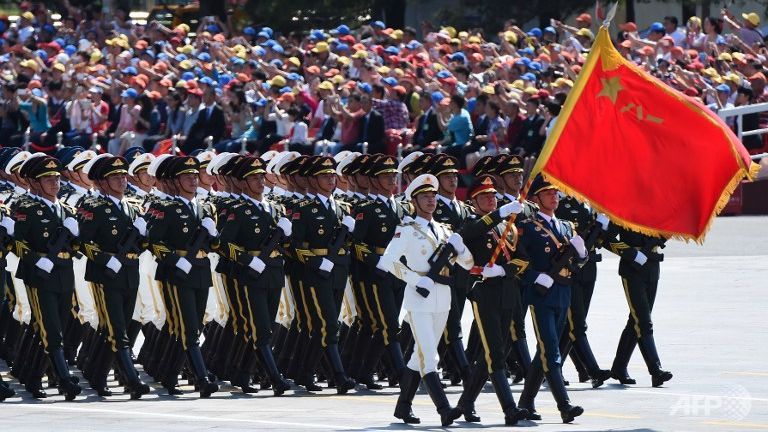
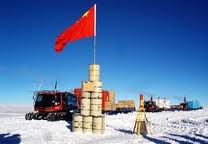
Chinese Antarctic Stations
An open Antarctic is coming. And though it might be hard to build a sense of urgency for a problem that is a bit more than 25 years out (and likely tied to the fickle pace of global warming, no less…), the 2048 review of the Antarctic Treaty and the real geopolitical risks posed by an over-hasty opening the Antarctic should sober everybody up really, really quickly.

If there’s a place where a war or two is gonna start, this is it.
Am I alarmist? No. Look, if developing countries are already on the verge of fighting over a few abandoned rocks in a spoiled and overfished sea, imagine what is going to happen in about thirty years from now, when an increasingly resource-starved international community fully realizes that an entire continent–an entire unpopulated continent–is “up for grabs”.
It will be a modern-day Gold Rush for space, resources and national pride.
If our current fumbling on Arctic Policy is any guide, I fear America will avoid taking even the most modest of proactive steps, frittering away a strong position it earned by leading the wave of Antarctic exploration back in 1957-8. Only when another country relieves the U.S. of regional leadership will the resulting crisis compel America to take some sort of action.
If we assume that Antarctica is the biggest geopolitical prize on the planet, passivity is unwise. Surely an opening continent is worth mulling over. After all, these things only open once.
What is the strategy?
territorial claims antarcticThe strategic question is fundamental: Is the United States going to play in the Antarctic?
There are good arguments both for and against: Since the International Geophysical Year (1957-8) America has been the primary driver of sustainable, measured Antarctic policy and certainly, with the longest-established permanent structure and largest base network, has a claim on the Continent as compelling as any other country out there.
Or we decide the Antarctic is not in our Area of Interest, then let’s make our peace (and possibly profit) as the international mechanism to manage Antarctica grows into powerless disfunction, and China–in the worst case scenario–relentlessly pushes other rival states/Claimants aside.
But if we do feel that Antarctica is a significant U.S. interest–and I think it should be–then the time for action is now.
I offer several suggestions:
Raise the Region’s Profile:
Barack ObamaUse the “Bully Pulpit” to express U.S. interest in the region.
It would be wise to move fast–before China starts calling the Antarctic a “Core Issue”–or whatever dog-whistle term they currently use to justify their latest land-grab,–let’s consider raising the region’s profile by sending President Obama to visit the U.S. McMurdo Station and/or Amudsen-Scott South Pole Station (in a quick divert from his April Asia trip?), and have the President simply announce that America has long had–and will long maintain–an active interest in the orderly management of a demilitarized Antarctica.
An expression of active, high-level U.S. interest now can do a lot to defuse feverish dreams of the Antarctic frontier serving as China’s version of Manifest Destiny.
(And, if we want to be tactical, with Australia making rumblings about re-evaluating their Antarctic Strategy, an expression of interest by America might prove to be particularly timely.)
Designate a Responsible Bureaucratic Lead:
C-17 McMurdoThe Antarctic–like so many other ignored “problem-from-hell” issues–slides neatly into an enormous number of America’s bureaucratic blind spots.
Antarctica isn’t just off the radar–it’s totally off the bureaucratic map. To give you an idea, in the US, the continent is not even really represented on the standard Mercator wall map–it’s just some vacant space at the bottom, obscured by map keys, scales and so forth. With the Mars Rovers, the American public probably knows more about the geography of Mars than the Antarctic.
Beyond cute marching Penguins and the pirate-like antics of the Sea Shepard Conservation Society, the region just isn’t on the forefront of America’s consciousness or imagination.
That lack of public awareness is exacerbated by the administrative peculiarities of the region. As a place that borders a number of regional commands or diplomatic jurisdictions, an unpopulated Antarctica defies easy administration/consideration/study/coordination by the human-terrain-COINfolks and the map-and-AOR-bound State and Defense Departments.
Making matters worse, the US just isn’t very good at focusing on the geopolitics of regions that straddle multiple AORs; the State Department buries Antarctica somewhere in the bureaucratic wasteland of Fisheries, Marine Conservation, Ocean and Polar Affairs. DOD engagement is largely logistical, via Operation Deep Freeze and other support to the National Science Foundation.
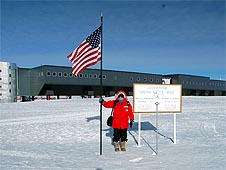
US Flag South PoleIt’s a fascinating conundrum.  As a government, we dismiss Antarctica as a viable administrative region due to low importance, yet the moment someone in the U.S. Government starts focusing on it, suddenly everybody realizes that it’s Actually Quite Fascinating (and then demand multi-agency meetings until the originally interested party runs out of money or expires in frustration).  Same thing happened in the Arctic–Partly because of the large number of interested parties and the difficulty of getting all the “non-interested-until-it’s-interesting-to-me-and-mine” bureaucratic elements to rally to the cause, there’s no real mechanism to force the U.S. Government to consider the larger political and military consequences of an opening Antarctic.
I urge that the United States appoint an Antarctic Czar–just as China has. Barring that step, I’d suggest DOD take unilateral action–just to force policy considerations and strategic alignment into the fore–and make Antarctica a specific command’s responsibility.
Given that China seems to be making a play to grow their influence in the region, I’d suggest ginning up some nascent regional study group under PACOM and working quickly to align their proposals/priorities with whatever bureaucratic structures, resources and operational capabilities we might be generating for the Arctic. Use that group to force and drive interagency interest. And then, in a few years, should things get more complex, let that study group calve off, and become it’s own (tiny) command.
Again, America has never been very good at handling large, multilateral negotiations. And as the Antarctic’s ruling body grows (largely by design) to become a completely unmanageable organization, it might be wise to start exploring alternatives before it all collapses under it’s own unwieldiness.
Build A Strategy:
Ships McMurdoAt this stage, I’d simply suggest that the DOD waste no resources and simply (and quickly) revise existing and newly-formulated Arctic policy to give it a less militarized tone. As I demonstrate below, there’s really no reason to change the basic fundamentals of the Arctic Strategy, and we can use pretty much the same verbiage to identify the Antarctic as…
…a secure and stable region where U.S. national interests are safeguarded, the U.S. homeland is protected, and nations work cooperatively to address challenges. It also articulates two main supporting objectives: Ensure (resource protection)
security, support safety, and promote (scientific)
defense cooperation, and prepare to respond to a wide range of challenges and contingencies—operating in conjunction with other nations when possible, and independently if necessary—in order to maintain stability in the region.
I made a few edits to accommodate the requirement for a de-militarized Antarctic, but you get the idea. No need to reinvent the wheel–just write it up, lob it out and start using it to drive interest throughout the wider U.S. Government (and beyond, frankly). It’d just be a PR stunt, yes, but…DOD does need a framework to drive a whole-of-government approach to better focus upon Falklands-like pre-positioning and jostling on the peripheries.
Without Antarctic policy, we’ll simply be caught unprepared as far-sighted countries maneuver for position. And, frankly, it would be good for the U.S. to have a national discussion about what the Antarctic “End State” might be.
And who knows? There might be more common ground between China and the United States than we expected. But without a goal in mind, we can’t start the process of trimming Chinese expectations of the Antarctic serving as their wide-open, resource-rich Manifest-Destiny-esque frontier.
Demand Resources:
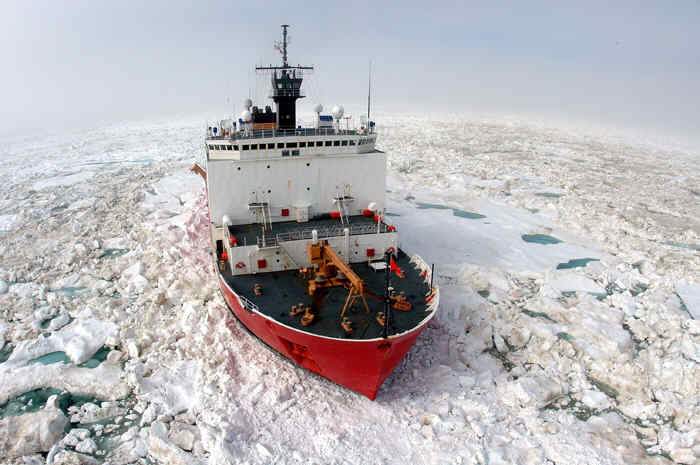
Healy_in_IceIf the Antarctic is a priority, then America needs new Coast Guard Cutters and the National Science Foundation needs several Ice-Hardened ships, stronger logistics and a bigger budget.
Two of America’s fleet of three large (and barely functional) ice-breaking cutters are approaching forty years of age, and require replacement. If we assume the replacement ships–should they even be built–are going to be operated by the USCG, they still should be built under USN guidance, and built with an innate ability to support the rapid “plug-in” of a range of military capabilities–in essence, we should build the next-generation heavy ice-breaker with the understanding that, at just about the end of their service life, they will likely be operating in a far more militarized region. That means reserving space and weight to bolt-on certain military capability should things in the 2040-timeframe start getting ugly in the Antarctic.
Other resources and requirements to start considering is a logistical and basing network to support operations in the Southern seas, along with acquisition/development of units and gear capable of operation in austere Polar environments.
We should also consider more sustained monitoring of the region and perform regular deep-dive assessments of research activity there.
Wargame It Out:
If we consider that “Domination and Exploitation of the Antarctic” has even the remotest chance of being a goal in China’s “Long Game” in their march towards global dominance, it might be wise to occasionally “Red Team” the region–step back and consider what steps that country might take on a global level to make domination of the Antarctic a reality.
Begin Asking Questions Now:
There are a few items that are worth urging wider international consideration and media scrutiny:
Chinese Flag Antarctic1. Continue to ask “What is China Doing?” As China’s base expansion continues apace, the international community must continue urging China to explain their long-range intentions. If China’s Antarctic-thrusting crowd has political traction, and looks at the South China Sea as more than just China’s “safe” route to the Middle East, but asChina’s sole safe route to Antarctica, then that raises the stakes in the South China Sea region considerably.
Given China’s current basing structure and evident interest in using Zhongshan Station as a major point of entry for other stations/bases (and the eventual basis for a territorial claim in areas particularly likely to be resource-rich?), building-in stronger future overwatch capability nearby and adding Antarctic bases/stations in the immediate region should be a priority for the U.S–along with America’s Indian and Australian allies.
39bUKFALKLANDISLANDSMOUNTPLEASANTRAFAIRPORTEGYP2. Start developing and discussing long-term options at the Antarctic gateways: It might be time to review long-term, collaborative basing options near the Antarctic Circle. The UK has a great base at the Falklands (pictured here), and Australia and New Zealand offer good alternatives too. Will Diego Garcia remain a useful option twenty years from now?  And what happens if that base is not viable over the long-term? What if it is rented out by the Chinese instead?  Will the Cocos Islands be available? Or will other islands further south?
If we assume Zhongshan Station will be China’s entry point to the Antarctic, then France’s Southern and Antarctic Lands–islands that hover just north of China’s base–stand to become a very interesting strategic asset.
Erik the Bold3. Continue to monitor just what the Erik Princes of the world doing: With the Antarctic demilitarized, countries that are interested in side-stepping that pesky restriction will start employing non-military resources to project power. As we know, China is very adept at using her non-military fishing, commercial and “law enforcement” Coast Guard/Research fleets to project power offshore and in coastal regions.
Onshore is a different matter, and I would suggest that Erik Prince’s recently announced exploration of, essentially, a Chinese version of Blackwater, is the first step in China’s attempt to adapt their wildly successful “national fleet” concept into a force for use ashore. Development of a similarly militarized (yet rigorously non-military) set of ground forces has been done before, and been used in the past by far less savory regimes to assimilate areas under questionable sovereignty.
Conclusion:
The Antarctic is the last frontier for an increasingly crowded and resource-starved planet. Traditional barriers to exploitation that protected this unpopulated continent–remoteness, harsh conditions and immature technology–are crumbling just as the governing structure of the region seems to be hurdling into an unworkable irrelevance. Some countries are even eying the region as a viable frontier–a modern repeat of a well-deserved “Manifest Destiny”.
imagesIt is high time for America–as the region’s undeniably good steward and manager–to spell out the goal-state for this pristine region, and get about making that vision a reality.
The time to engage is now. If America continues a policy of passive disinterest, the South Pole will become little more than a militarized camp, a boom-town primed to explode–And at that point, when the Penguins and whales are truly in the crossfire, what options will we have beyond an indignant tweet or two and an overhasty, poorly thought out “Samantha Powers-esque” attempt at intervention? So, with that thought, I close by urging the U.S. Government to be smart and be proactive. Put the Antarctic back on America’s strategic map!
UPDATE: The day this post went live, the State Department announced that they were going to appoint an Arctic Ambassador.  That’s great news, but I would–given that both regions are facing similar challenges–expand this person’s brief to allow the appointee to be a “Polar” Ambassador, helping to promote long-term solutions for both regions.http://nextnavy.com/

Sunday, 16 February 2014

Of Course China Wants to Replace the U.S.

If China becomes the world’s most powerful country, it won’t be satisfied being America’s number two.


Over at The Week, Think Progress’s Zack Beauchamp has a provocative piece arguing that “China is not replacing the United States as the global hegemon. And it never will.” Specifically, Beauchamp posits that “China faces too many internal problems and regional rivals to ever make a real play for global leadership. And even if Beijing could take the global leadership mantle soon, it wouldn’t. China wants to play inside the existing global order’s rules, not change them.”
The piece is well-argued and certainly worth a read. In particular, Beauchamp does us a service in combating the myth of the inevitability of China’s rise. He usefully points out that China’s economy faces a multitude of challenges that may prevent it from reaching the potential many currently foresee. He also points out that China faces powerful neighbors that won’t stand by idly if Beijing seeks to construct a new regional order, much less a global one.
Still, on balance, I think Beauchamp’s piece does more to confuse than to inform. The first issue is that even though he discusses the regional balance of power in the piece, his overall argument is that China will not be capable of replacing the United States as the “global hegemon.” Unfortunately, there are many who would claim that America is a global hegemon. However, that argument is preposterous under any reasonable definition of hegemony. It is true that in the post-Cold War (if not earlier) the U.S. has been the only power capable of projecting military power in any region of the world. But this has not allowed it to dictate the regional order of every continent as it largely can in the Western Hemisphere.
Moreover, even if America really is a global hegemon, this would just make it more unlikely that any rising power could replace it as a global hegemon. After all, America’s primacy in the post-Cold War era was only made possible because no other great power existed.  Since China’s rise won’t stop the U.S. from being a great power, unless the two go to war and China wins, Beijing’s relative power will be far less than America’s at the end of the Cold War. And of course, America’s relative power will also be far less than what it enjoyed in 1991.
There are other issues with Beauchamp’s analysis of China’s relative power. For example, he notes that “one analysis suggests China’s GDP may not surpass America’s until the 2100s.” To begin with, while possible, this view seems to be decidedly in the minority among serious economists. Even if China’s economy crashes before 2018—around the time many believe China’s absolute GDP will surpass America’s—it still seems likely that it will find a more sustainable economic model before 80 years pass. And given that China has about four times as many people as the United States, it could easily surpass the U.S. in absolute GDP terms in less than 80 years.
But even if China’s economy doesn’t surpass the United States, this hardly suggests it won’t present a major strategic challenge to Washington. Consider that, according to Paul Kennedy, in 1938 Japan’s share of world manufacturing was just 3.8 percent while America’s was 28.7 percent and the U.K.’s was 9.2 percent. A year earlier, according to the same source, the U.S. national income was $68 billion while the British Empire’s was $22 billion. Japan’s, comparison, was just $4 billion. Yet, in the initial battles of the Pacific War Japan decisively defeated the U.S., England, and the Dutch across the region.
Similarly, the Soviet Union’s GDP was only ever about half as large as the United States, and many times much less than that. This doesn’t mean that America and its allies didn’t face a real strategic threat in the Soviet Union during the Cold War.
The more egregious part of Beauchamp’s case, however, is his contention that China does not seek to challenge the U.S.-led order. In his own words: “Even if this economic gloom and doom is wrong, and China really is destined for a prosperous future, there’s one simple reason China will never displace America as global leader: It doesn’t want to.”
He goes on to explain: “China is content to let the United States and its allies keep the sea lanes open and free ride off of their efforts. A powerful China, in other words, would most likely to be happy to pursue its own interests inside the existing global order rather than supplanting it.”
Beauchamp isn’t alone in holding this view, which has many faithful adherents in the West. In fact, not too long ago it was the running consensus in the United States, as well as the foundation of U.S. China policy in both the George W. Bush and the early Barack Obama administrations.
One place where this view has not been very popular is in China itself. Indeed, far from being happy to allow the U.S. Navy to keep its sea lanes open, Chinese leaders have been warning about their country’s “Malacca Dilemma” for over a decade now. They have also been actively trying to reduce America’s ability to cut off China’s energy and raw material imports. As they should be—it would be irresponsible for China’s leaders to allow their country’s economy to be at the mercy of a potential competitor if they have the realistic opportunity to allow China to secure its own shipping lanes. This is doubly true in light of the fact that the U.S. has been known to impose sanctions on many countries, including China itself after Tiananmen Square.
But the issue goes much deeper than that. In fact, it goes to the heart of the Chinese Communist Party’s legitimacy at home. At its core, the CCP’s claim to power is based on its ability to restore China to its past glory. Again, neither China nor its leaders have ever made any secret about this. For example, the CCP has always emphasized that it saved China from its “century of humiliation” at the hands of the Western and Japanese colonial powers.
Similarly, since coming to power in 2012, Xi Jinping has repeatedly stressed that, because of the CCP’s rule, the “great rejuvenation of the Chinese nation” is now within China’s grasp. As Zheng Wang points out, the term “rejuvenation is deeply rooted in Chinese history and the national experience.”
Wang continues:
“As proud citizens of the ‘Middle Kingdom’ the Chinese feel a strong sense of chosenness and are extremely proud of their ancient and modern achievements. This pride is tempered, however, by the lasting trauma seared into the national conscious as a result of the country’s humiliating experiences at the hands of Western and Japanese imperialism. After suffering a humiliating decline in national strength and status, the Chinese people are unwavering in their commitment to return China to its natural state of glory, thereby achieving the Chinese Dream.”
Thus, the CCP would lose all its legitimacy at home if it voluntarily subordinated China to the United States despite being the more powerful country. The CCP treasures its grip on power above all else, and therefore it should come as no surprise that it has already ruled out taking this risk.By 

China has not replaced America — and it never will

China may have the population advantage, but from a military standpoint, America remains on top.
China may have the population advantage, but from a military standpoint, America remains on top. (Elizabeth Dalziel - Pool/Getty Images)
M
any people seem to think it's simply a matter of when, not if, China takes the reins of world leadership. How, they think, can America's 314 million people permanently outproduce a population that outnumbers the U.S. by over a billion people?
This facile assumption is wrong. China is not replacing the United States as the global hegemon. And it never will.
China faces too many internal problems and regional rivals to ever make a real play for global leadership. And even if Beijing could take the global leadership mantle soon, it wouldn't. China wants to play inside the existing global order's rules, not change them.
Start with the obvious military point: The Chinese military has nothing like the global reach of its American rival's. China only has one aircraft carrier, a refitted Russian vessel. The U.S. has 10, plus nine marine mini-carriers. China's first homemade carrier is slated for completion in 2018, by which time the U.S. will have yet another modern carrier, and be well on its way to finishing another. The idea that China will be able to compete on a global scale in the short to medium term is absurd.
Even in East Asia, it's not so easy for China. In 2012, Center for Strategic and International Studies experts Anthony Cordesman and Nicholas Yarosh looked at the data on Chinese and Taiwanese military strength. They found that while China's relative naval strength was growing, Taiwan had actually improved the balance of air power in its favor between 2005 and 2012 — just as China's economic growth rate, and hence influx of new resources to spend on its military, was peaking.
China's equipment is often outdated, and its training regimes can be comically bad. A major part of its strategic missile force patrols on horseback because it doesn't have helicopters.
This isn't to deny China's military is getting stronger. It is. And one day, this might require the United States to rethink its strategic posture in East Asia. But Chinese hard power is nowhere close to replacing, or even thinking about challenging, American military hegemony.
And look at China's geopolitical neighborhood. As a result of historical enmity and massive power disparities, Beijing would have a tough time convincing Japan, South Korea, and Taiwan that its military buildup is anything but threatening. Consequently, the smaller East Asian states are likely to get over their mutual disagreements and stick it out together in the American-led alliance system for the foreseeable future.
To the north and west, China is bordered by Russia and India. China fought each of them as recently as the 1960s, and both are likely to be threatened by any serious Chinese military buildup. Unlike the United States, bordered by oceans and two friendly states, China is surrounded by enemies and rivals. Projecting power globally is hard when you've got to worry about defending your own turf.
But what happens when China's GDP passes America's? Well, for one thing, we're not really sure when that will be. Realizing that current growth rates were economically and ecologically unsustainable, the Chinese government cut off the investment spigot that fueled its extraordinary 10 percent average annual growth. Today, China's growth rate is about half of what it was in 2007. One analysis suggests China's GDP may not surpass America's until the 2100s.
Moreover, China's GDP per capita is a long way off from matching Western standards. In 2012, the World Bank assessed China's at $6,009; the United States' was $57,749. The per-person measure of wealth matters in that it reflects the government's capacity to pay for things that make its citizens happy and healthy.
That's where China's internal headaches begin. The Chinese government has staked its domestic political legitimacy on delivering rapid, massive improvements in quality of life for its citizens. As growth slows, domestic political dissent may rise. Moreover, growth's worst side effect to date — an unprecedented ecological crisis — is also a source of massive discontent. China has 20 of the world's 30 most polluted cities; environmental cleanup costs may hoover up 3 percent of China's GDP. That's throwing 30 percent of its yearly average growth (during the pre-2013 boom years!) down the drain.
The mass death and poisoning that follow as severe pollution's handmaidens threaten the very foundations of the Communist Party's power. American University China scholar Judith Shapiro writes that environmental protests — which sometimes "shut down" huge cities — are "so severe and so central to the manner in which China will 'rise' that it is no exaggeration to say that they cannot be separated from its national identity and the government's ability to provide for the Chinese people."
That's hardly the only threat to the Chinese economy. China's financial system bears a disturbing resemblance to pre-crisis Wall Street. Its much-vaunted attempt to move away from an unsustainable export-based economy, according to Minxin Pei, may break on the rocks of massive corruption and other economic problems. After listing a slew of related problems, Pei suggests we need to start envisioning a world of "declining Chinese strength and rising probability of an unexpected democratic transition in the coming two decades."
But even if this economic gloom and doom is wrong, and China really is destined for a prosperous future, there's one simple reason China will never displace America as global leader: It doesn't want to.
Chinese foreign policy, to date, has been characterized by a sort of realist incrementalism. China has displayed no interest in taking over America's role as protector of the global commons; that's altogether too altruistic a task. Instead, China is content to let the United States and its allies keep the sea lanes open and free ride off of their efforts. A powerful China, in other words, would most likely to be happy to pursue its own interests inside the existing global order rather than supplanting it.
In 2003, Harvard's Iain Alastair Johnston analyzed data about Chinese hostility to the global status quo across five dimensions: participation in international institutions, compliance with international norms, twisting the rules that govern global institutions, making the transformation of global political power into a clear policy goal, and acting militarily on that objective. He found that China was "more integrated into and more cooperative within international institutions than ever before," and that there was "murky" evidence at best of intent to challenge the United States outside of them. Johnston reassessed parts of his argument in 2013 and concluded that not much had changed.
It actually, then, wouldn't be bad for Americans if China bears like Pei were wrong, and China really did blossom economically in the 21st century. China probably won't have the military means to challenge the foundations of global stability and prosperity, and even if it didn't, its leaders don't seem to want to.
And morally speaking, a Chinese boom would be great: Expanded Chinese economic growth has been the single greatest anti-poverty campaign in modern history. That's an extraordinary accomplishment Americans should be able to celebrate without any attendant status anxiety produced by the phantom of a Chinese world order.By  http://theweek.com/